
Dry ice plays a crucial role in modern food industry, serving as an essential tool for food preservation, quality control, and cold chain logistics. With its extremely low temperature of -78.5°C (-109.3°F), dry ice provides superior cooling capabilities compared to traditional ice, making it indispensable for food processing facilities, transportation companies, and food service establishments.
This comprehensive guide explores diverse applications of dry ice in food industry, helping you understand how this versatile cooling medium can enhance your food operations.
What Is Dry Ice in Food Industry?
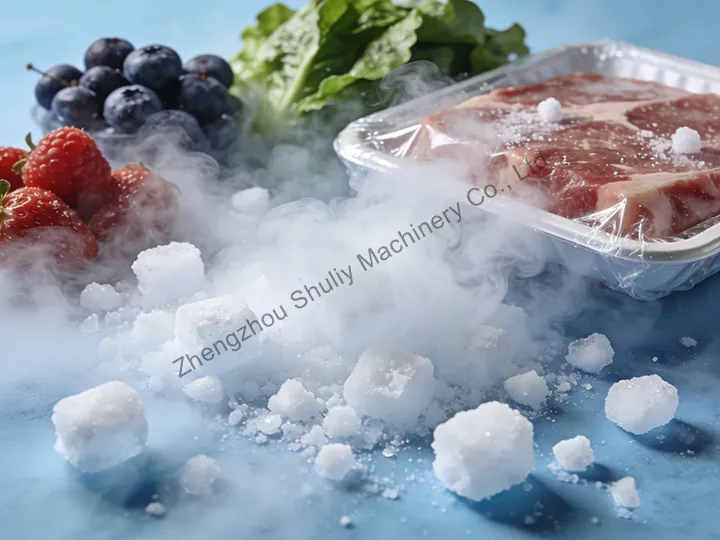
Dry ice is solid carbon dioxide (CO₂) at -78.5°C, produced by compressing and cooling liquid CO₂. Unlike water ice, dry ice sublimates directly from solid to gas without passing through liquid phase, which means it doesn’t melt into water that could contaminate food products. This unique property makes dry ice particularly valuable in food industry applications where moisture control and temperature maintenance are critical.
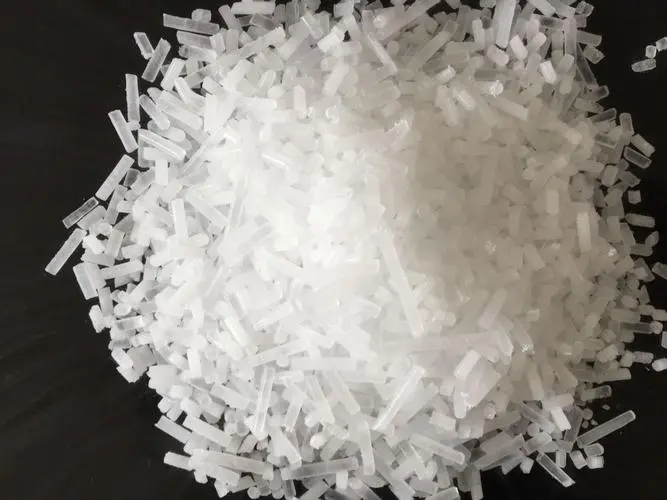
Dry ice pellets and blocks are the two primary forms used in food industry, each offering specific advantages for different applications. The choice between pellets and blocks depends on factors such as cooling requirements, space constraints, and handling considerations.

Key Applications in Food Industry
Dry ice serves multiple critical functions throughout food production, processing, and distribution. Below are the most significant applications:
Food Preservation and Storage
One of the most common applications is preserving food products during storage and handling. Dry ice provides several advantages for food preservation:
- Extended shelf life: Maintains products at optimal temperatures, significantly extending shelf life compared to conventional refrigeration methods
- Quality preservation: Rapid cooling prevents bacterial growth and maintains food texture, color, and nutritional quality
- Moisture control: Unlike water ice, dry ice doesn’t add moisture to products, preventing sogginess and maintaining product integrity
- Temperature precision: Provides consistent cooling at -78.5°C, ideal for temperature-sensitive products like seafood and meat
These benefits make dry ice particularly valuable for preserving seafood, meat products, dairy items, and prepared foods that require precise temperature control during storage and display.
Food Transportation and Cold Chain
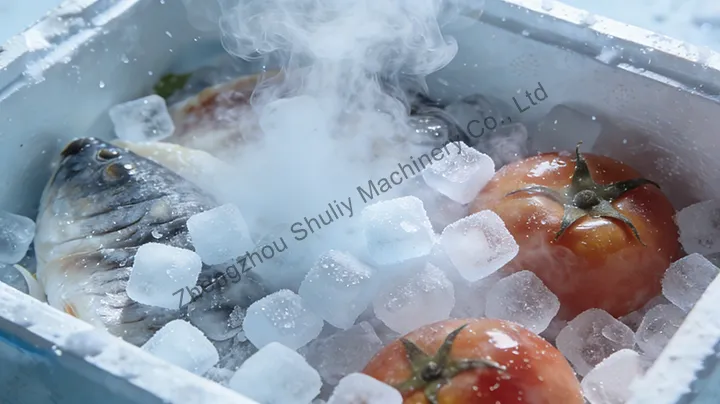
Transporting temperature-sensitive food products requires reliable cooling solutions to maintain quality and safety. Dry ice offers several advantages for food transportation:
Extended range: Dry ice maintains low temperatures for extended periods, allowing longer transportation distances without quality degradation
Reduced weight: Dry ice is lighter than water ice for the same cooling capacity, reducing transportation costs and vehicle load
No water runoff: Eliminates water runoff that could contaminate products or create safety hazards during transport
These characteristics make dry ice ideal for transporting seafood, meat products, dairy, and other perishable items over long distances, especially in regions with limited refrigeration infrastructure.
Food Processing and Manufacturing
In food processing facilities, dry ice serves multiple critical functions during production processes:
- Rapid cooling: Quickly cools products after cooking or processing to optimal storage temperatures, preventing bacterial growth
- Temperature shock: Provides rapid temperature reduction for processes requiring immediate cooling, such as blast freezing or tempering
- Process stabilization: Maintains consistent temperatures during processing, ensuring product quality and safety standards
- Equipment cleaning: Used to clean food processing equipment without water contamination or chemical residues
The ability to provide precise, controlled cooling makes dry ice essential for processes requiring strict temperature management, such as meat processing, seafood handling, and bakery operations.
Food Service and Catering
Food service establishments and catering operations utilize dry ice for various applications:
- Buffet and display cooling: Keeps food items at safe temperatures during service, maintaining quality and presentation
- Emergency cooling: Provides rapid cooling for equipment breakdowns or unexpected temperature fluctuations
- Ingredient preparation: Used for rapid chilling of ingredients and mixtures during food preparation
- Beverage service: Provides efficient cooling for beverages without dilution or water contamination
These applications help food service establishments maintain food safety standards while improving operational efficiency and product quality.
Advantages of Dry Ice in Food Industry
The use of dry ice in food industry applications offers numerous benefits over traditional cooling methods:
| Benefit | Water Ice | Dry Ice |
|---|---|---|
| Temperature | 0°C (32°F) | -78.5°C (-109.3°F) |
| Moisture Addition | Adds water to products | No moisture addition |
| Weight Efficiency | Heavy for same cooling capacity | Lighter, reduces transport costs |
| Shelf Life | Standard preservation | Extended preservation |
| Contamination Risk | Water runoff possible | No contamination risk |
| Storage Space | Requires freezer space | More compact storage |
These advantages translate to improved food quality, reduced waste, lower operational costs, and enhanced food safety for businesses implementing dry ice solutions.
Dry Ice Forms for Food Industry
Food industry applications utilize different forms of dry ice based on specific requirements:
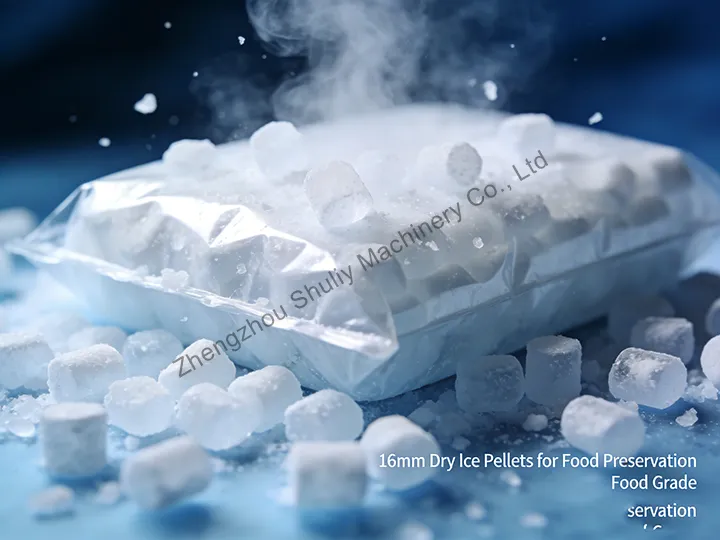
Dry Ice Pellets: 3-19mm pellets offer uniform cooling and are ideal for applications requiring consistent temperature distribution, such as food processing and bulk cooling.
Dry Ice Blocks: Standard blocks provide longer cooling duration and are suitable for transportation and storage applications where extended cooling is required.
The choice between pellets and blocks depends on factors such as cooling requirements, space constraints, handling considerations, and specific application needs.

Best Practices for Food Industry Dry Ice Use
To maximize the effectiveness of dry ice in food industry applications, consider these best practices:
Storage and Handling
Proper storage and handling of dry ice ensures optimal performance and safety:
- Use insulated containers: Store dry ice in specialized dry ice boxes to minimize sublimation and extend storage life
- Minimize exposure: Keep dry ice covered when not in use to reduce sublimation rate
- Proper ventilation: Ensure adequate ventilation in storage areas to prevent CO₂ accumulation
- Temperature monitoring: Monitor storage temperatures to ensure optimal cooling conditions
Application Safety
Implement safety protocols when using dry ice in food environments:
- Personal protection: Use insulated gloves when handling dry ice to prevent frostbite
- Food contact: Ensure dry ice doesn’t directly contact food products unless intended for cooling
- CO₂ safety: Monitor CO₂ levels in enclosed spaces to prevent oxygen deficiency
- Training: Train staff on proper handling and safety procedures for dry ice applications
Cost Considerations
When implementing dry ice solutions in food industry operations, evaluate the economic aspects:
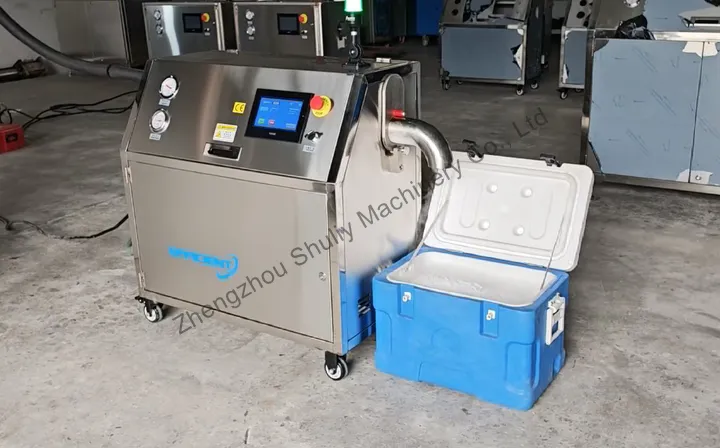
Production costs: On-site dry ice production using liquid CO₂ storage tanks can be more cost-effective than purchasing commercial dry ice, especially for high-volume operations.
Storage efficiency: Proper dry ice storage boxes reduce sublimation losses and extend storage life, improving cost-effectiveness.
Most food industry operations report significant cost savings through reduced food waste, extended shelf life, and improved product quality when implementing dry ice solutions. The elimination of water contamination and reduced transportation weight further enhance economic benefits.
Conclusion
Dry ice has become an essential component of modern food industry operations, providing superior cooling capabilities for preservation, transportation, and processing applications. The unique properties of dry ice, including its extremely low temperature and moisture-free cooling, offer significant advantages over traditional water ice methods.
Whether you’re a food processor, transportation company, or food service establishment, implementing dry ice solutions can enhance your operations while improving food quality and safety. Contact Shuliy Machinery today to learn how our dry ice production and storage solutions can address your specific food industry cooling challenges.