
Dry ice blasting machines have revolutionized cleaning processes in the automotive industry, offering an environmentally friendly and efficient solution for various maintenance and restoration tasks.
Unlike traditional abrasive cleaning methods, dry ice blasting uses solid CO₂ pellets that sublimate upon impact, leaving no secondary waste to clean up.
This comprehensive guide explores the diverse applications of dry ice blasting machines in automotive manufacturing, maintenance, and restoration, helping you understand how this innovative technology can transform your operations.
What Is Dry Ice Blasting in Automotive Industry?
Dry ice blasting, also known as CO₂ cleaning, is a non-abrasive cleaning method that uses compressed air to accelerate dry ice pellets at high speeds toward contaminated surfaces.
When the ice pellets hit the surface, they sublimate instantly from solid to gas, creating a thermal shock that lifts contaminants without damaging the underlying material. This process is particularly valuable in the automotive industry where precision cleaning and surface preservation are critical.
The dry ice blasting machine typically uses 3mm dry ice pellets as the blasting medium, which are produced by specialized dry ice pelletizers. These pellets are accelerated through a nozzle at supersonic speeds, effectively removing grease, oil, paint, carbon deposits, and other contaminants from automotive components and surfaces.
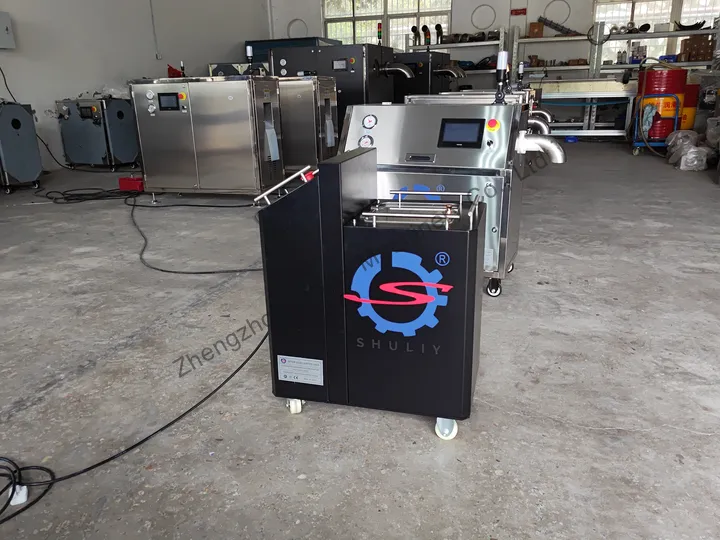
Key Applications in Automotive Industry
Dry ice blasting machines serve multiple critical functions throughout the automotive manufacturing and maintenance lifecycle. Below are the most significant applications:
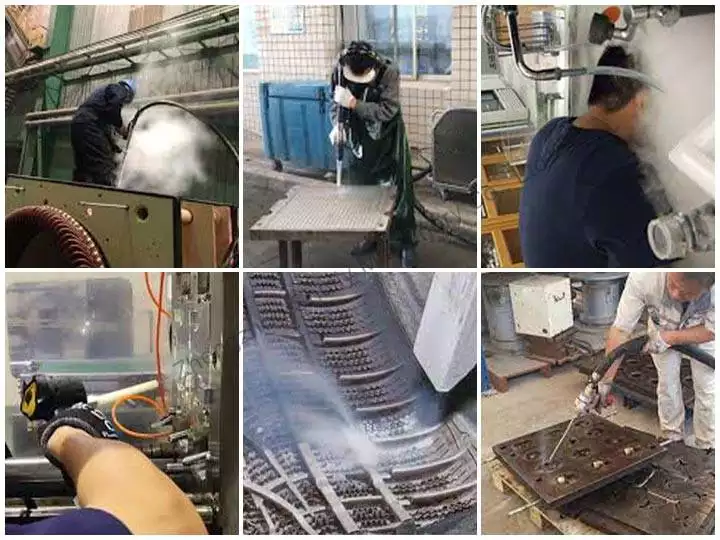
Engine and Component Cleaning
One of the most common applications is cleaning internal and external engine components. Dry ice blasting effectively removes carbon deposits, oil residues, and combustion byproducts from:
- Engine blocks and cylinder heads: Removes carbon buildup without damaging precision-machined surfaces
- Pistons and connecting rods: Cleans oil and carbon deposits while maintaining dimensional accuracy
- Turbochargers and superchargers: Removes oil and carbon deposits from complex internal passages
- Fuel injectors and intake manifolds: Clears deposits that affect fuel efficiency and performance
The non-abrasive nature of dry ice blasting ensures that critical engine components maintain their original tolerances and surface finishes, unlike sandblasting or chemical cleaning methods that can alter dimensions or leave residue.
Paint and Coating Removal
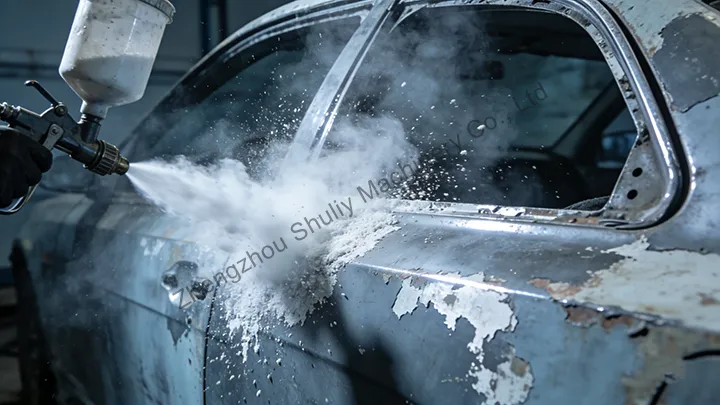
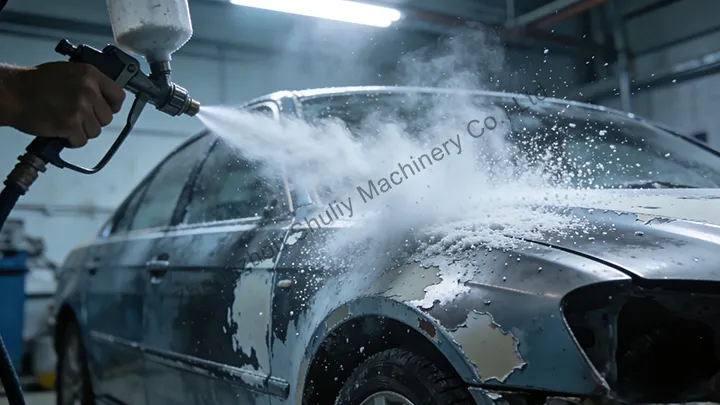
Automotive restoration and refinishing processes frequently require removal of old paint, undercoating, and protective coatings. Dry ice blasting offers several advantages for these applications:
Complete Removal: Dry ice blasting removes multiple layers of paint and coatings in a single pass, reducing processing time and labor costs compared to chemical stripping or mechanical sanding.
Surface Preservation: The thermal shock effect lifts coatings without damaging the underlying metal or composite materials, maintaining original surface integrity for refinishing.
No Chemical Residue: Unlike chemical paint strippers, dry ice blasting leaves no hazardous chemical residues that require additional cleaning or disposal.
This method is particularly valuable for removing undercoating from vehicle chassis, stripping paint from body panels during restoration, and preparing surfaces for repainting without compromising structural integrity.
Mold and Die Cleaning
In automotive manufacturing facilities, molds and dies used for plastic and rubber component production require regular cleaning to maintain product quality. Dry ice blasting provides an ideal solution for:
- Injection molds: Removes plastic residues and release agents without damaging precision mold surfaces
- Rubber molds: Cleans rubber buildup and release compounds while preserving mold details and textures
- Die casting molds: Removes metal flash and casting residues without abrasive wear to expensive tooling
- Composite molds: Cleans resin and fiber residues from advanced composite molding processes
The ability to clean molds without disassembly or cooling downtime significantly increases production efficiency and extends mold life, making dry ice blasting a cost-effective maintenance solution for automotive parts manufacturers.
Surface Preparation and Restoration
Before painting, coating, or welding automotive components, proper surface preparation is essential. Dry ice blasting excels at:
- Weld preparation: Removes oxidation and contaminants from weld areas before welding, ensuring strong, clean weld joints
- Surface profiling: Creates optimal surface texture for paint adhesion without removing excessive material
- Rust and corrosion removal: Removes surface rust without damaging underlying metal, preparing surfaces for protective coatings
- Adhesive removal: Eliminates old adhesive residues from trim, badges, and emblems during restoration
Advantages of Dry Ice Blasting in Automotive Industry
The adoption of dry ice blasting technology in automotive applications offers numerous benefits over traditional cleaning methods:
| Benefit | Traditional Methods | Dry Ice Blasting |
|---|---|---|
| Surface Damage | High risk of abrasion and dimensional changes | Non-abrasive, preserves original surfaces |
| Secondary Waste | Requires cleanup of sand, chemicals, or media | No secondary waste, ice sublimates completely |
| Environmental Impact | Chemical runoff and dust generation | Environmentally friendly, no hazardous waste |
| Processing Time | Multiple steps and drying time required | Clean and ready immediately after blasting |
| Equipment Wear | High wear on components from abrasives | Minimal wear, extends equipment life |
These advantages translate to significant cost savings, improved quality, and reduced environmental impact for automotive manufacturers and service facilities implementing dry ice blasting technology.
Best Practices for Automotive Dry Ice Blasting
To maximize the effectiveness of dry ice blasting in automotive applications, consider these best practices:
Equipment Selection
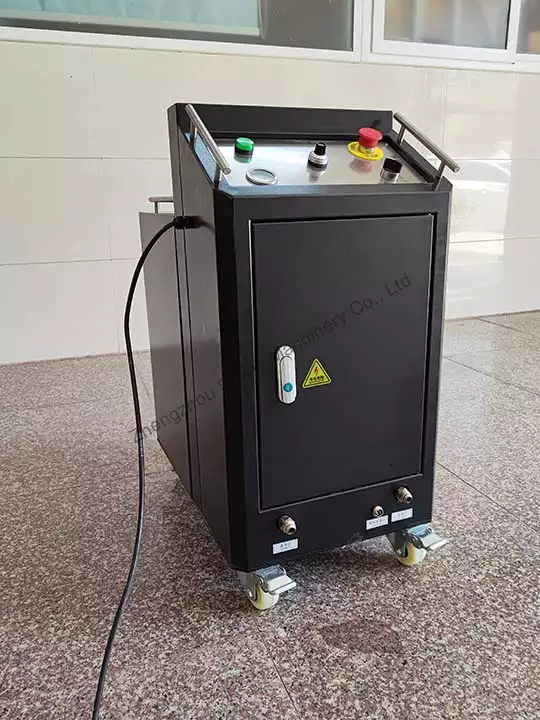
Choose appropriate dry ice blasting machine specifications based on your specific applications:
- Production capacity: Select machines with 30kg/h capacity for general cleaning, or higher capacity for production line applications
- Air pressure requirements: Ensure adequate compressed air supply (5-10bar) and flow rate (2-3m³/min) for optimal performance
- Nozzle selection: Use appropriate nozzle sizes and types for different applications – smaller nozzles for precision work, larger for rapid surface cleaning
- Ice pellet size: Standard 3mm pellets work well for most automotive applications, though smaller pellets may be used for precision cleaning
Operational Safety
Implement proper safety protocols for dry ice blasting operations:
- Personal protective equipment: Operators should wear safety glasses, hearing protection, and appropriate respiratory protection
- Ventilation: Ensure adequate ventilation in enclosed spaces to prevent CO₂ accumulation
- Training: Provide comprehensive training on equipment operation and safety procedures for all operators
- CO₂ monitoring: Use CO₂ detectors in confined spaces to ensure safe working conditions
Cost Analysis and ROI
When considering dry ice blasting implementation, evaluate the total cost of ownership versus traditional methods:
Initial Investment: Dry ice blasting machines require initial capital investment, though costs vary based on capacity and features. However, this investment is offset by reduced labor costs, faster processing times, and eliminated waste disposal expenses.
Operating Costs: Primary operating costs include dry ice pellets and compressed air. Dry ice pelletizers can produce ice on-site at costs significantly lower than purchasing commercial ice, while compressed air requirements are similar to other pneumatic tools.
Most automotive facilities report return on investment within 6-18 months through labor savings, reduced downtime, and improved quality. The elimination of chemical disposal costs and reduced component replacement due to abrasive damage further enhance the economic benefits.
Conclusion
Dry ice blasting machines have become indispensable tools in the modern automotive industry, offering superior cleaning capabilities for engines, components, molds, and surfaces. The non-abrasive, environmentally friendly nature of this technology provides significant advantages over traditional cleaning methods, including reduced secondary waste, preserved surface integrity, and improved operational efficiency.
Whether you’re an automotive manufacturer, restoration shop, or maintenance facility, implementing dry ice blasting technology can transform your cleaning processes while reducing environmental impact and operating costs. Contact Shuliy Machinery today to learn how our dry ice blasting solutions can address your specific automotive cleaning challenges.