
Choosing the right dry ice making machine depends on the type of dry ice you want to manufacture, your expected production capacity, and its intended applications.
Before purchasing a dry ice maker machine, businesses should consider four main factors: production goals, output requirements, final product shape, and application scenarios. Understanding these differences helps avoid unnecessary investment and ensures the equipment matches actual production needs.
Define your dry ice production goals
The first step is to determine what type of dry ice product you plan to sell or use. Different products require different forming processes and equipment.
Dry ice block machine
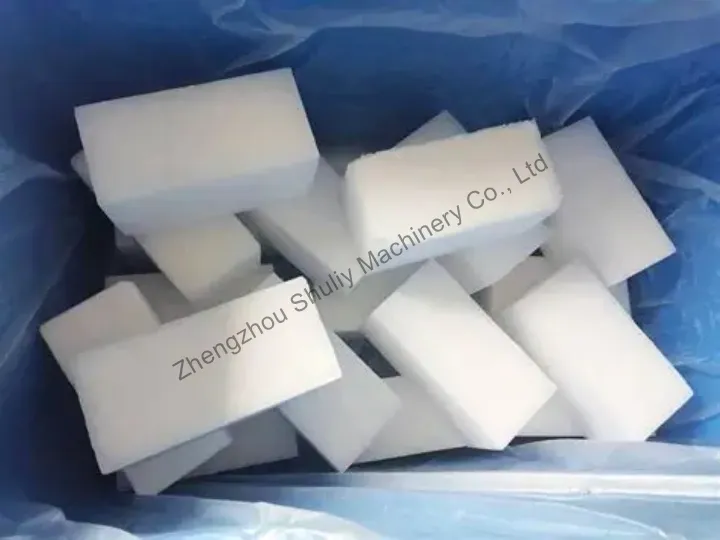
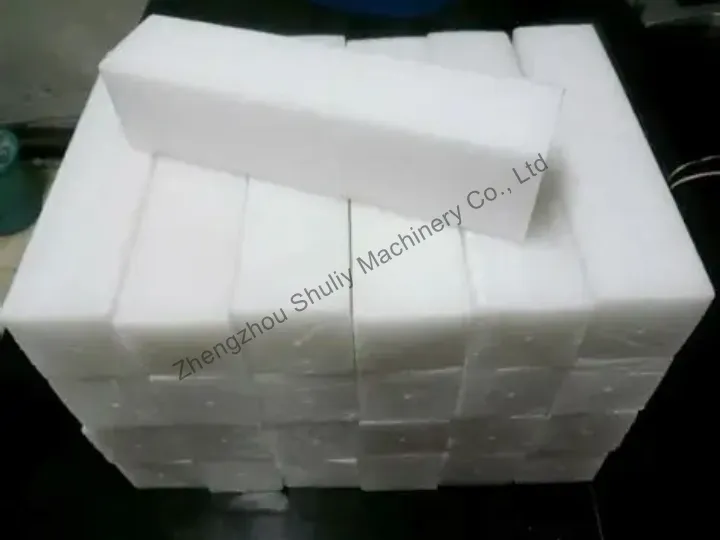
Dry ice blocks are solid pieces of compressed CO₂, available in different dimensions and weights depending on the machine’s mold configuration. Their larger size makes them suitable for applications requiring sustained cooling.
Typical applications include:
- Cold chain transportation of frozen food and seafood
- Temperature control during food storage and delivery
- Cooling temperature-sensitive products
For businesses supplying these markets, a máquina de bloco de gelo seco is a suitable production solution.
Dry ice pellet machine
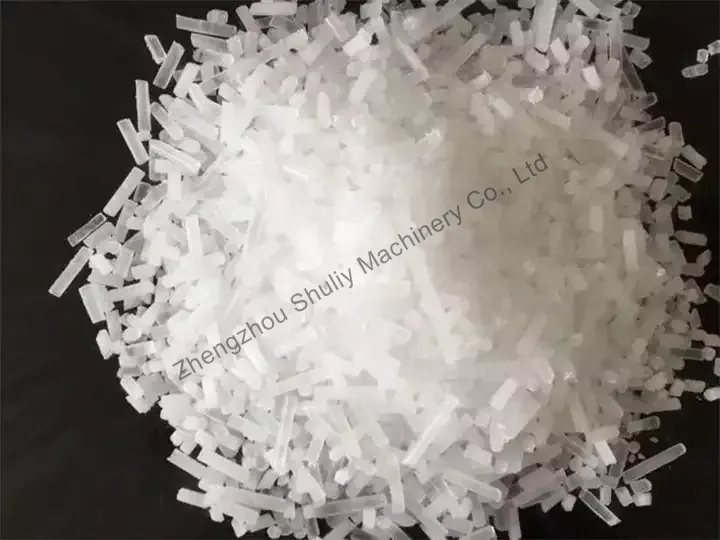
Dry ice pellets are small cylindrical pieces of solid CO₂. Their diameter and length depend on the pelletizer’s die and cutting configuration.
Common applications include:
- Dry ice blasting for industrial equipment cleaning
- Food processing and cooling
- Laboratory and industrial low-temperature applications
If your target customers need small, uniform dry ice pellets, a peletizador de gelo seco is the appropriate choice.
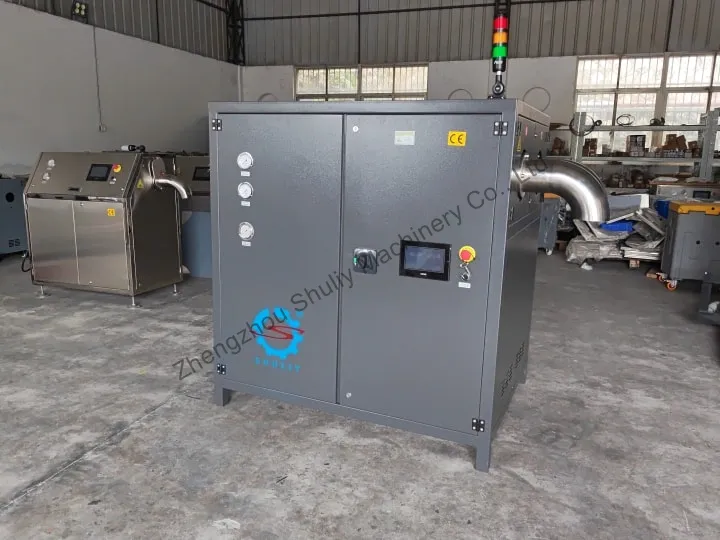

Choose the right production capacity
Production capacity is another important consideration when selecting a dry ice making machine. The required output depends on your customer demand, daily working hours, and expected business growth.
Before purchasing, consider the following:
- Daily production demand: Estimate the amount of dry ice you need to manufacture each day. This helps determine the required machine output.
- Working schedule: If the equipment needs to operate for multiple shifts, choose a machine that can support your planned production schedule.
- Future orders: Consider whether your business may need to increase production in the future. Selecting suitable capacity from the beginning can reduce the need for early equipment replacement.
- Raw material supply: Both machines require a stable liquid CO₂ supply. Check the availability, storage conditions, and supply capacity of liquid CO₂ before determining your production target.
When comparing dry ice making machines, pay attention to the actual output per hour rather than relying only on general capacity descriptions.
Consider your target application
Different industries have varying requirements regarding the form of dry ice. When selecting a dry ice making machine, it is essential to clarify the intended application.
| Application | Recommended Dry Ice Type | Suitable Machine | Main Purpose |
|---|---|---|---|
| Cold chain transportation | Dry ice blocks | Máquina de bloco de gelo seco | Keep frozen food and seafood at low temperatures |
| Food preservation | Dry ice blocks | Máquina de bloco de gelo seco | Maintain low temperatures during storage and delivery |
| Industrial equipment cleaning | Dry ice pellets | Peletizador de gelo seco | Remove oil, dirt, and other surface contaminants |
| Food processing | Blocks or pellets | Both machines | Cool food materials during processing |
| Industrial cooling | Blocks or pellets | Both machines | Provide low-temperature cooling for different processes |
Choose a dry ice making machine from Shuliy
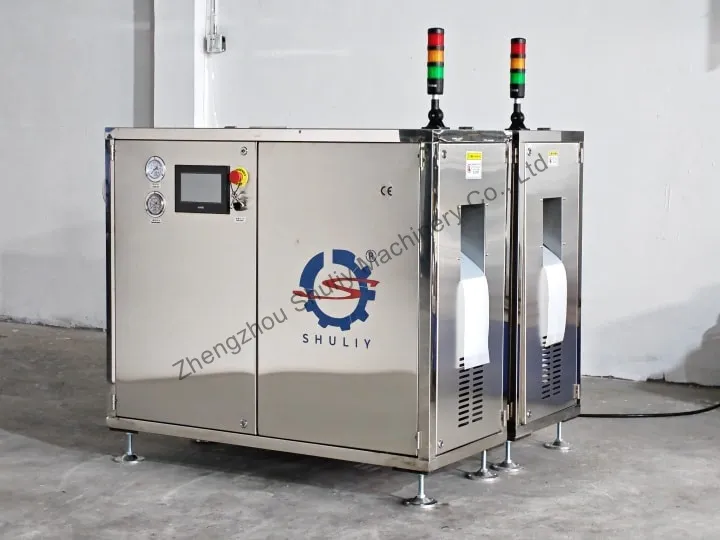
Shuliy provides dry ice block machines and dry ice pelletizers for different production requirements. Whether you intend to produce dry ice blocks for cold-chain transport or dry ice pellets for industrial cleaning, we can recommend the ideal dry ice making machine for your needs.
Don’t hesitate! Contact us today to get your dry ice production started!